Your roof is more than just a cover for your home; it’s a critical component of its structure, protection, and efficiency.
Regular roof cleaning, often overlooked, is a vital maintenance practice that ensures your roof performs optimally while protecting your health, safety, and investment. From the perspective of a power washing company, here’s what the science says about the benefits of professional roof cleaning.
1. Enhancing Health and Safety
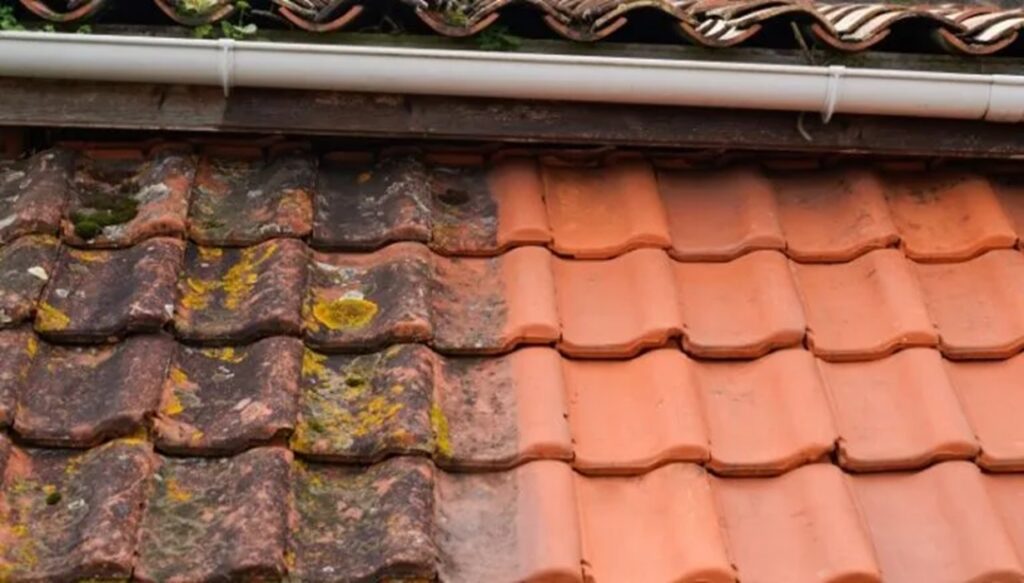
Your roof may harbor more than just dirt—it’s often a breeding ground for mold, mildew, algae, and other organic growth. One major culprit is Gloeocapsa magma, a type of cyanobacteria that thrives on moist, shaded surfaces. Left untreated, this organic growth can lead to several issues:
- Health Hazards: Mold and mildew spores from your roof can enter your home’s ventilation system, contributing to respiratory problems such as asthma and allergies. According to the Centers for Disease Control and Prevention (CDC), exposure to mold can cause coughing, wheezing, and even chronic sinus infections in sensitive individuals.
- Slip-and-Fall Risks: When algae and moss spread, they create slippery surfaces on shingles, gutters, and rooflines. This poses a hazard for anyone who needs to access the roof, such as maintenance workers or homeowners.
Regular roof cleaning helps remove these hazards, promoting a healthier and safer environment for your family and visitors.
2. Prolonging the Life of Your Roof
Power washing companies know that your roof is constantly under attack from the elements and biological growth. One of the most destructive culprits is Gloeocapsa magma, which feeds on the limestone filler in asphalt shingles. Over time, this feeding process weakens the structural integrity of your shingles, leading to:
- Granule Loss: The protective granules on shingles are eroded, leaving your roof vulnerable to UV rays and further damage.
- Moisture Retention: Algae and moss act like a sponge, holding water against your roof’s surface. This prolonged moisture exposure accelerates rot, increases the risk of leaks, and encourages the growth of other damaging organisms.
Studies have shown that untreated roofs can lose up to 50% of their lifespan due to the effects of organic growth. Regular cleaning removes these damaging organisms, extending the life of your roof and saving you thousands in premature replacement costs.
3. Improving Energy Efficiency
A clean roof isn’t just about aesthetics—it directly impacts your home’s energy efficiency. Here’s how:
- The “Wet Sponge” Effect: Algae, moss, and other organic growth retain moisture, creating a “wet sponge” effect. This trapped moisture increases the heat retention of your roof, forcing your cooling system to work harder to maintain comfortable indoor temperatures.
- Reduced Reflectivity: Algae stains, particularly the black streaks caused by Gloeocapsa magma, reduce your roof’s ability to reflect sunlight. The U.S. Department of Energy reports that darker roofs absorb more heat, raising the temperature inside your home and increasing cooling costs.
By removing organic growth, roof cleaning restores the reflective properties of your roof, keeping your home cooler and reducing energy bills.
4. Preserving Curb Appeal and Property Value
Your roof is one of the most visible parts of your home. Streaks, stains, and moss growth can make an otherwise beautiful home look neglected. According to real estate experts, a clean and well-maintained roof can boost your home’s curb appeal, increasing its perceived value by up to 10%.
Regular roof cleaning also helps protect your investment. A roof marred by visible damage and algae stains can deter potential buyers and lead to costly negotiations during the sale process.
5. Environmental Impact of Prolonged Roof Lifespan
A longer-lasting roof is also better for the environment. Roof replacements generate significant construction waste, with 11 million tons of asphalt shingles sent to landfills annually in the United States, according to the Environmental Protection Agency (EPA). By extending the life of your roof through regular cleaning, you’re contributing to sustainability and reducing your home’s environmental footprint.
The Veterans Pressure Washing Difference
At Veterans Pressure Washing, we take pride in providing professional roof cleaning that prioritizes safety, effectiveness, and the longevity of your roof. Using our soft washing technique, we combine low-pressure water with eco-friendly detergents to safely and effectively remove harmful algae, moss, and bacteria—without damaging your shingles.
Our team is experienced, insured, and committed to delivering top-quality service while helping you protect one of your home’s most critical assets: your roof. From improving your roof’s energy efficiency to extending its lifespan, we’re here to ensure your investment remains in top condition.
We’d be glad to inspect your roof and provide a customized cleaning solution tailored to your needs. Let our power washing company help prolong the life of your roof, improve your home’s energy efficiency, and keep your family safe and comfortable.